


While this article highlights a selection of programs, institutions, and training organizations, they represent only a small portion of the broader ecosystem that has emerged since the introduction of Part 107. Over the past decade, hundreds of programs across industry, education, public safety, and global markets have contributed to building today’s drone industry workforce. The examples shared below illustrate the wide range of approaches shaping the workforce, not the full scope of contributors.
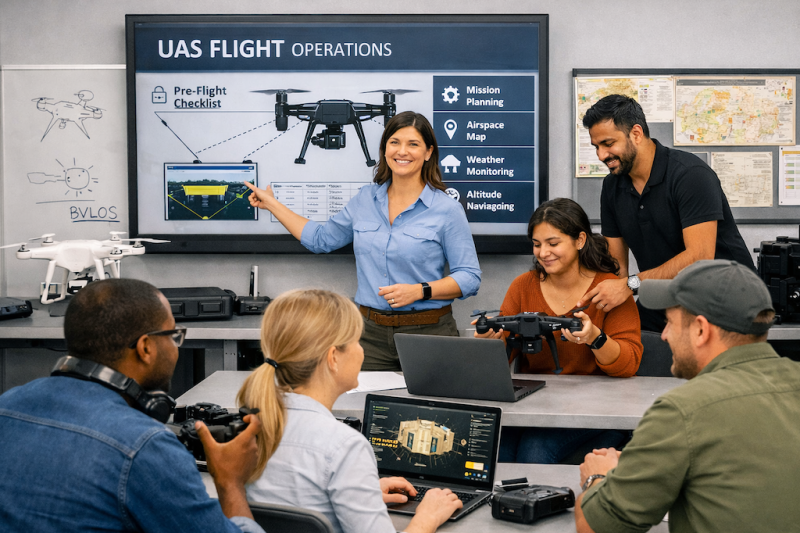
When the Federal Aviation Administration (FAA) introduced Part 107 in 2016, it marked a turning point in U.S. aviation. For the first time, individuals could become certified remote pilots—the FAA’s official title for what most people simply call a commercial drone pilot—by passing a rigorous aeronautical knowledge exam. That exam covers airspace, weather, regulations, safety, and mission planning, and it has become the gateway into one of the fastest-growing sectors in aviation.
Since then, the remote pilot workforce has expanded at a pace few other aviation sectors can match. What began with 20,362 certificated remote pilots at the end of 2016 has grown to 492,311 by the end of 2025, according to the most recently published FAA data. That surge reflects more than rising interest—it mirrors the rapid adoption of drones across commercial operations, public safety, media production, environmental monitoring, and government agencies. The momentum is real, and it underscores a broader shift: drones are no longer emerging technology. They are operational technology.
But the story doesn’t end with pilot certifications. In fact, that’s only the beginning. Over the past decade, a robust ecosystem of colleges, universities, training organizations, and global programs have emerged to prepare the workforce not just to fly, but to excel in the deeper technical competencies that will define the next decade of uncrewed aviation.
Today’s drone workforce supports a wide spectrum of sectors including infrastructure, energy, public safety, agriculture, media, environmental science, and emerging autonomous systems, requiring specialized skills and training pathways.
This is the workforce evolution now underway.

Early Accelerators of the Remote Pilot Workforce
As Part 107 took hold, a small number of early training providers played an outsized role in shaping the commercial drone workforce. Long before today’s broader ecosystem matured, organizations like Drone Pilot Ground School and Pilot Institute made high-quality, self-paced aeronautical education widely accessible. Their programs helped tens of thousands of aspiring remote pilots prepare for the FAA exam, making them foundational contributors to the rapid expansion of the certified remote pilot community.
Drone Pilot Ground School
Drone Pilot Ground School was one of the earliest online Part 107 preparation programs, launching soon after the rule went into effect in 2016. Known for its structured curriculum, detailed lesson modules, and extensive practice testing, the program quickly became a trusted resource for individuals, schools, and public safety agencies nationwide. Its early presence helped establish self-paced online learning as a viable and effective pathway to certification.
Pilot Institute
Pilot Institute entered the market as the demand for remote pilot certification accelerated and rapidly became one of the most widely recognized online training providers. Their self-paced course combines clear video instruction, practice quizzes, and real-world explanations that make complex aeronautical concepts accessible to beginners. With a strong emphasis on student support and consistently high passing rates, Pilot Institute has helped a significant portion of today’s remote pilots earn their certification, further expanding access to professional drone training across the country.
Higher Education: Building the Foundation for a Modern Aviation Workforce
Higher education has become one of the most powerful engines driving the evolution of the Uncrewed Aerial Systems (UAS) workforce. What began as a niche offering at a handful of aviation schools has matured into a nationwide network of degree programs, research centers, and applied learning environments. Colleges and universities are no longer simply teaching students how to fly; they are preparing them to operate in a world where drones intersect with robotics, autonomy, data science, and regulated airspace. This shift reflects the industry’s rapid transition toward advanced operations and the need for professionals who can navigate both technical and regulatory complexity.
Embry-Riddle Aeronautical University
As the world’s largest and most respected aeronautical university, Embry-Riddle offers one of the most comprehensive UAS degree pathways available. Their programs combine aviation fundamentals with robotics, systems engineering, data analysis, and advanced operations. Students learn not only how to fly, but how to integrate drones into complex missions, analyze sensor data, and work within regulated airspace.
Virginia Tech
Virginia Tech has become a national leader in UAS research, testing, and workforce development. Through the Virginia Tech Mid-Atlantic Aviation Partnership (MAAP), one of the FAA’s designated UAS test sites, students gain hands-on experience with real-world operations. Their programs blend engineering, flight operations, and airspace integration, preparing graduates for careers in inspection, public safety, defense, and advanced research.
Community Colleges and Technical Institutions
Across the country, numerous community colleges have stepped into a critical role by offering accessible and affordable pathways into the industry. Many now provide Part 107 preparation, hands-on flight training, and certificates aligned with local workforce needs. These programs are helping thousands of students enter the field quickly and confidently.
Training Organizations: Preparing Professionals for Real-World Missions
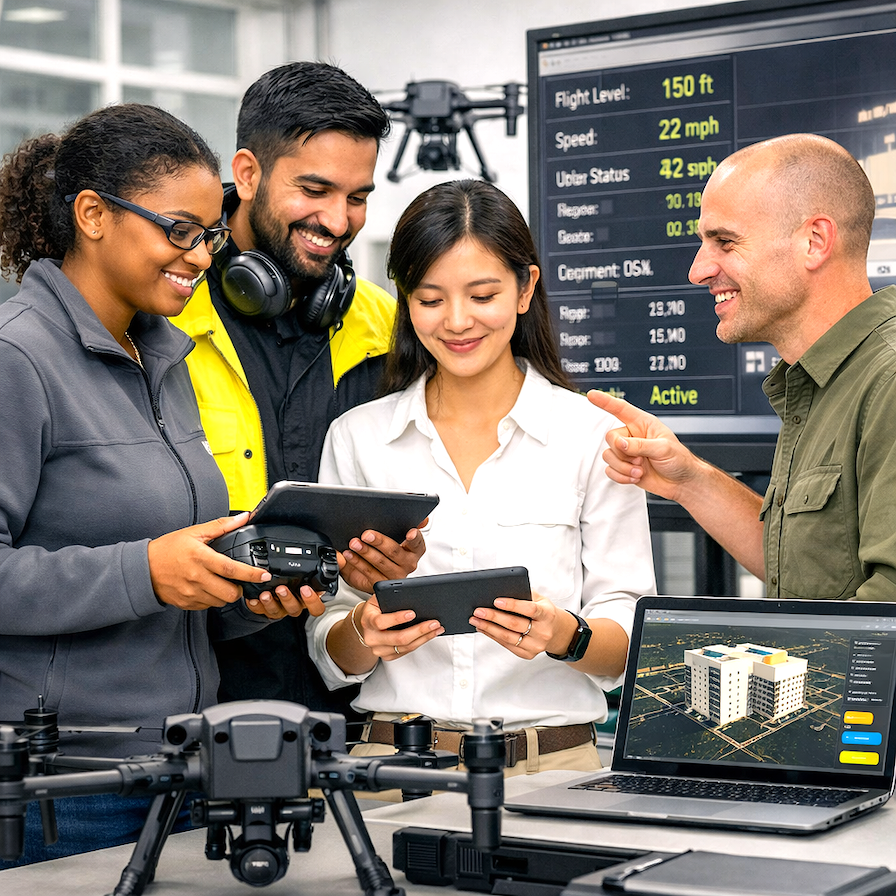
While higher education builds foundational knowledge, specialized training organizations are shaping the professionals who must perform in high-stakes, real-world environments. These companies sit at the intersection of regulation, safety, and mission execution—equipping public safety teams, government agencies, and commercial operators with the operational discipline required for modern UAS deployments.
Influential Drones in New Jersey
Influential Drones focuses on preparing public safety agencies, government organizations, and commercial operators to integrate drones into their missions. Their training emphasizes operational safety, regulatory compliance, and mission-specific workflows. For agencies adopting drones for the first time, Influential Drones provides a structured, safety-driven path to responsible implementation.
Sundance Media Group in Nevada
Sundance Media Group is known for its expertise in UAS risk mitigation, night operations, and safety-critical mission planning. Their programs help organizations understand not just how to fly, but how to manage risk, document procedures, and operate within complex regulatory environments. Their work is especially valuable for industries where safety and compliance are non-negotiable.
Airversity in Missouri
Airversity’s Center of Excellence plays a growing role in developing commercial, industrial, and public safety professionals. Their programs go beyond basic flight skills, emphasizing mission-specific competencies such as mapping, thermal imaging, first-response coordination, and ground-based operational planning. Airversity’s curriculum mirrors the realities of field operations—helping students build confidence with complex workflows, data-driven decision-making, and equipment selection.
Zephyr Drone Simulator in Virginia
Zephyr has become a leading simulation platform for organizations seeking scalable, high-fidelity drone training. Designed for businesses, educational institutions, and public safety agencies, Zephyr combines accurate flight physics with structured training modules that shorten time to proficiency while reducing operational risk. Its course-building tools, performance tracking, and realistic sUAS profiles allow instructors to train larger cohorts, standardize skill development, and evaluate pilot readiness before they ever take a real aircraft into the field. With adoption across universities, government agencies, and industry partners, Zephyr is helping modernize how the drone workforce builds foundational and advanced operational skills.
Educators Who Are Shaping the Next Generation of UAS Talent
Across the country, a new generation of educators is redefining what it means to prepare students for careers in uncrewed aviation. These leaders are not only teaching technical skills, they are building pipelines that connect learners to real industry opportunities, emerging technologies, and career pathways that didn’t exist a decade ago.
Professor Skip Fredricks of Grossmont College, California
A two-time, Emmy-nominated drone cinematographer, Skip Fredricks brings deep industry experience into the classroom. At Grossmont College, he has helped create a program that partners with film and media companies to place students into careers that are traditionally difficult to access.
Professor Jay Seidel of Fullerton College, California
Jay Seidel leads one of the most respected UAS programs in the country. Fullerton College has built strong partnerships with public safety agencies, environmental organizations, and commercial operators, giving students hands-on experience and direct pathways into the workforce.
Dr. LaQuata Sumter of STEAM Thru Drones
Dr. Sumter is leading efforts to create consistent, scalable curriculum frameworks for middle and high school UAS programs. By introducing aviation concepts early and aligning them with industry needs, she is helping build a long-term pipeline that begins well before college.
Rocket Drones: America’s Educational Drone Racing Program
Rocket Drones brings drone racing and hands-on drone learning into elementary, middle, and high schools, using gamified instruction and school-ready kits to strengthen STEM and Career and Technical Education (CTE) engagement. Their programs emphasize teamwork as students collaborate on racing strategy, troubleshooting, and mission-style challenges—building technical confidence and the collaborative mindset needed for future aviation and robotics careers.

Workforce Development Beyond U.S. Borders
The development of the UAS workforce is a global movement, not a U.S.-only effort. Around the world, organizations are building training models that reflect their regional needs, regulatory frameworks, and operational priorities. From geospatial mapping and environmental monitoring to advanced mission planning, BVLOS development, and regulatory consulting, international programs are expanding access to drone education and elevating global standards for professional readiness.
GeoNadir in Australia
GeoNadir is democratizing access to drone mapping and geospatial data. Their platform and training resources help students, researchers, and emerging professionals build the skills needed for data-centric UAS careers.
HOVER UAV in Australia
HOVER UAV is a leading provider of advanced drone training, regulatory support, and operational consulting across Australia. The company specializes in helping organizations navigate complex approvals, develop BVLOS and autonomous operations, and build safe, scalable UAS programs. Their work supports government agencies, emergency services, research institutions, and commercial operators—strengthening Australia’s capacity for high-end, mission-ready drone operations.
Drone Space in Ireland
Drone Space provides training, internships, and consulting for complex UAV operations. Their programs support advanced mission planning, regulatory compliance, and operational readiness for commercial and government clients.
UAV Aerial Works in South Africa
As an aviation training organization, UAV Aerial Works offers professional training for advanced UAS operations, including mapping, inspection, and specialized mission profiles. Their programs help operators meet rigorous aviation standards.
Marine Spatial Information Solutions (MarSIS) Inc. in Barbados
MarSIS specializes in training participants to use drones for mapping and geospatial analysis. Their programs support participatory mapping, environmental monitoring, and community-driven geospatial projects thus demonstrating how UAS skills can support sustainable development.
The Skills That Will Define the Future of the Drone Industry
The drone industry’s early workforce gains have laid a strong foundation, but the next decade will demand a deeper, more specialized set of skills. As drones transition from manually flown tools to autonomous, data-driven systems, the professionals who operate them must evolve as well. The future workforce will need to understand not only flight operations, but also AI-enabled analytics, airspace integration, robotics, cybersecurity, and mission-critical decision-making.
Beyond Part 107, today’s workforce increasingly relies on advanced credentials, OEM training, and standards-based certifications that support specialized missions and complex operational environments.
These emerging skill areas include:
- Autonomy and Beyond Visual Line of Sight (BVLOS) operations
- AI-enabled data analysis
- Uncrewed Traffic Management (UTM) and airspace integration
- Mission-critical operations
- Robotics and systems engineering
- Cybersecurity and data governance
These capabilities will define the next generation of UAS professionals and determine how effectively the industry can scale into more complex, autonomous, and integrated airspace environments.
The Foundation Is Strong and Now It’s Time to Build Upward
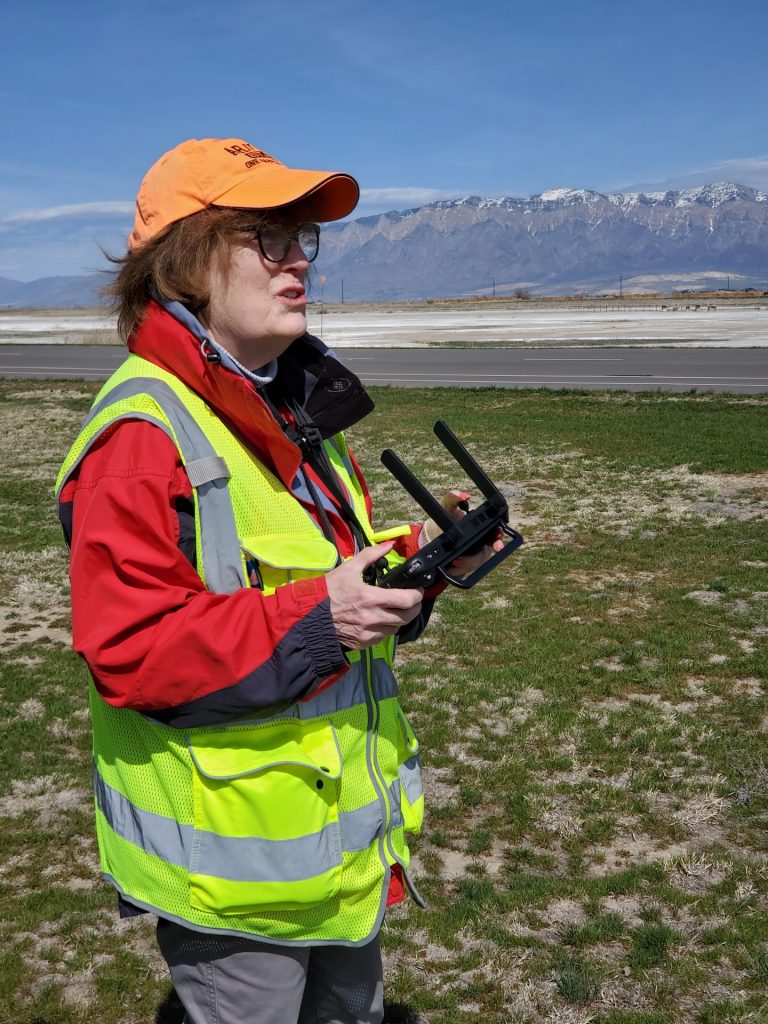
The drone industry has made remarkable progress since 2016. The workforce is expanding, educational programs are multiplying, and global training organizations are raising the bar for professional readiness.
The next challenge is not starting from scratch but building on this foundation to prepare operators, analysts, engineers, and mission specialists for the autonomy-driven future ahead.
As autonomy, AI, and advanced airspace integration accelerate, the next chapter of workforce development will be defined by how effectively education, industry, and government collaborate to prepare operators for a rapidly evolving aviation landscape.
The momentum is here.
The talent is emerging.
And the organizations shaping today’s workforce are laying the groundwork for the next decade of uncrewed aviation.