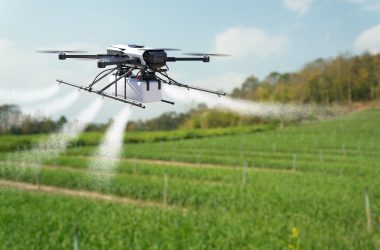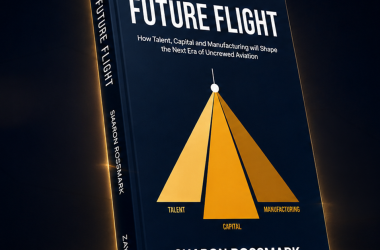




Europe is entering a defining moment in the evolution of autonomous systems. Robotics, advanced air mobility, automated logistics, maritime autonomy, and AI-enabled infrastructure are no longer distant ambitions. They are active priorities across the continent. The vision is bold: to build a competitive, sovereign, and ethically grounded autonomy ecosystem that reflects Europe’s leadership and global ambitions.
Delivering on that vision will require Europe to translate momentum into coordinated action supported by regulatory clarity, industrial capacity, and a workforce prepared to scale autonomy responsibly.
But the questions that now sit at the center of every strategy discussion are, “Who will build Europe’s autonomous future and is the talent pipeline strong enough to sustain it?” This is not a technical challenge, it is a strategic one. Europe’s ability to lead in autonomy will depend less on breakthrough technologies and more on whether it can cultivate, retain, and empower the people who make those technologies real.
Europe’s Workforce Is Not Keeping Pace With Its Ambition
Demand for autonomy-related skills is rising sharply. Robotics companies are scaling and drone operators are beginning to leverage Europe’s harmonized regulatory framework, which allows certain types of operations to be recognized across borders.¹ Automotive manufacturers are integrating higher levels of automation while hospitals, ports, and logistics hubs are adopting autonomous systems to address workforce shortages and operational pressures.
Yet the talent pipeline is not expanding at the same rate.
Europe faces several converging pressures:
- A tightening technical workforce as experienced professionals retire faster than new talent enters the field²
- Intense global competition for AI, robotics, and cybersecurity expertise
- Training pathways that vary widely across member states
- A slower transition from research excellence to applied workforce readiness
- Limited visibility into autonomy careers for young learners and mid-career professionals
The result is a widening gap between Europe’s autonomy ambitions and its ability to staff them.
The Skills That Will Define Europe’s Autonomous Workforce
Autonomous systems require a blend of deep technical expertise and operational judgment. Europe’s future workforce must be fluent in:
- Robotics and mechatronics
- AI and machine learning
- Cybersecurity and data governance
- Human-machine teaming and operational oversight
- Systems integration and testing
- Regulatory and domain-specific knowledge
These skills are not optional. They are the foundation of Europe’s competitiveness.

Europe Has Strengths And Structural Gaps
Europe has world-class research institutions, strong industrial clusters, and a regulatory environment that prioritizes safety and societal alignment. Initiatives such as Horizon Europe, SESAR, the AI Act, and national robotics strategies demonstrate political will.
But structural gaps remain and they must be addressed with urgency.
Education and Training Systems Are Not Yet Fully Aligned
Europe’s education and training landscape is rich but highly varied. Each member state has its own approach to technical education, vocational training, and industry partnerships. This diversity is a strength, but it also creates inconsistencies in how autonomy-related skills are taught, assessed, and recognized.
The challenge is not standardization, it is alignment.
Cross-Sector Mobility Is Limited
Skills developed in automotive or aerospace do not always transfer seamlessly into healthcare, maritime, or logistics autonomy. Europe needs clearer pathways that help workers move across sectors without starting from zero.
Mid-Career Upskilling Is Underdeveloped
Europe’s existing workforce is one of its greatest assets. But technicians, operators, and engineers need flexible, modular upskilling pathways that fit real-world schedules. Today, those pathways are uneven and often difficult to access.
Europe Must Broaden Participation in Autonomy Careers
Europe’s long-term competitiveness depends on drawing talent from the widest possible pool. Many communities — including women and other underrepresented groups — remain less visible in robotics, AI, and autonomy roles.³ Expanding access, awareness, and opportunity is essential to building a workforce at the scale autonomy requires.
Europe Must Strengthen Its Appeal as a Place to Build a Career
Global competition for autonomy talent is intense. Europe can strengthen its position by offering compelling research environments, strong industry-academia partnerships, and clear long-term career pathways. This is about opportunity, not policy debate.
What Europe Must Do Now
To secure its leadership position, Europe must treat workforce development as a strategic priority equal to technology development. Five actions stand out:
- Create a shared skills framework that defines autonomy-related competencies and supports mobility within Europe’s own workforce.
- Expand applied learning environments to include test ranges, living labs, regulatory sandboxes, and dual-education pathways.
- Invest in mid-career upskilling at scale through modular credentials and employer-supported training.
- Broaden access to autonomy careers by increasing awareness, mentorship, and pathways for learners from a wide range of backgrounds.
- Strengthen Europe’s appeal as a place to build a career through strong research ecosystems and cross-sector collaboration.
Europe’s Autonomous Future Depends on Its People
Europe has the vision, regulatory leadership, and industrial capacity to shape the global future of autonomy. But technology alone will not secure that future. The decisive factor will be whether Europe can build and sustain a workforce capable of designing, deploying, and governing autonomous systems at scale.
The future of autonomy is, at its core, a talent challenge. And the time to solve it is now.
References
- European Union Aviation Safety Agency (EASA). Cross-Border Operations Under Regulation (EU) 2019/947. Published 2023.
- Eurostat. Ageing Europe — Looking at the Lives of Older People in the EU. Published 2023.
- European Commission. She Figures 2021: Gender in Research and Innovation. Published 2021.
Author’s Note: The author used AI to support early ideation of this article. All perspectives, analysis, and final editorial decisions reflect the author’s independent judgment.
This article was first published within the XPONENTIAL Europe magazine: https://www.xponential-europe.com/