


How growers, manufacturers and regulators are reshaping aerial application.
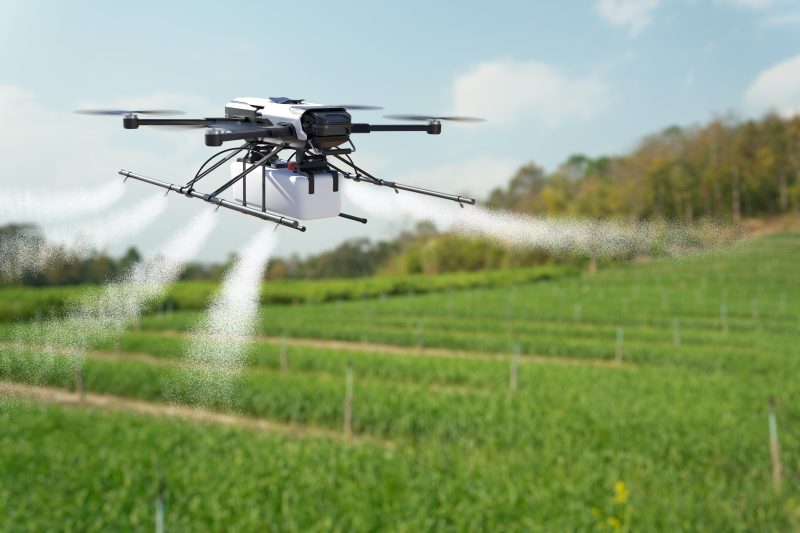
Agricultural spray drones are becoming part of the U.S. farming landscape at a remarkable pace. According to the American Spray Drone Coalition’s 2025 industry survey, acreage treated by agricultural spray drones reached 16.4 million acres, an increase of nearly 59% from the previous year. What began largely as a tool for fungicide applications in Midwestern row crops has expanded to include fertilizer applications, organic production, mosquito abatement, the distribution of beneficial insects and other specialized uses.
Their appeal is practical. Drones can operate in challenging terrain, reach areas where conventional spray equipment struggles and enter fields without creating wheel tracks or soil compaction. For growers and applicators, they provide another option when field conditions, crop type or timing make traditional equipment less practical.
But the story unfolding around agricultural drones is becoming much larger than the aircraft themselves.
The industry is now being shaped simultaneously by farmers seeking workable solutions, manufacturers trying to build the next generation of aircraft, regulators confronting national security and supply chain concerns, and U.S. companies attempting to compete in a market overwhelmingly influenced by Chinese technology.
A Market Built Around Chinese Technology
The scale of that influence is difficult to overlook.
On the Federal Aviation Administration’s Section 44807 exemption list for drones weighing 55 pounds or more, including payload at liftoff, in December 2025, the majority of agricultural aircraft were of Chinese origin. American companies represented a meaningful portion of the list, alongside manufacturers from Hungary, India and Japan. This dominance did not happen by accident. Chinese manufacturers developed sophisticated agricultural platforms while building mature supply chains around motors, batteries, flight controllers and other components.
At the 2026 Spray Drone End User Conference and World Ag Expo, conversations with distributors and manufacturers repeatedly returned to the same problem: some of the most difficult components to replace are also among the most important. Dealers have continued to support and sell authorized Chinese platforms already on the market while closely monitoring federal policy. For farmers, the calculation remains equally practical. They need reliable aircraft, readily available replacement parts and technology that makes economic sense.
Regulation Changes the Conversation
That market is now confronting an increasingly complicated regulatory environment.
Federal policy surrounding foreign-manufactured drones and critical components has introduced uncertainty throughout the industry. The Federal Communications Commission’s actions concerning equipment authorization have particularly significant implications for manufacturers seeking to introduce new aircraft and communication systems into the U.S. market.
The distinction between agencies matters. The FAA regulates the operation of agricultural drones through requirements that include Section 44807 exemptions for certain aircraft over 55 pounds and Part 137 certification for agricultural aircraft operations. The FCC, meanwhile, regulates radiofrequency equipment authorization. Other terms increasingly heard throughout the industry—including NDAA compliance and Blue UAS—address different security and procurement considerations and should not be treated as interchangeable certifications. For manufacturers and distributors, these distinctions are no longer academic. They influence product development, component sourcing, investment and long-term business strategy.
The regulatory landscape continues to evolve. Most recently, the FCC opened a proceeding seeking public comment on whether to prohibit the future import, marketing or sale of certain foreign-made drones already on its Covered List, including categories that could directly affect agricultural spray drones. The proposal does not apply to drones already owned by operators and remains under consideration.
Can the U.S. Build a Competitive Alternative?
The changing environment has created an opening for American manufacturers, but replacing an established global supply chain is considerably more difficult than assembling an aircraft domestically. Some U.S. companies began moving away from Chinese critical components well before the current regulatory debate. Kelley Wittenberg of Central UAS Technologies described the process as having “de-Chinesed” systems because the sensitive nature of some contracts required NDAA compliance.
The transition carries costs. Changing components requires engineering, testing and validation to ensure the resulting aircraft performs at least as well as the system it replaces. The challenge is illustrated by Guardian Agriculture, a U.S. company that shut down in 2025 after working to establish a heavy-lift agricultural platform. Its experience demonstrated the capital, technical development and commercialization challenges involved in bringing a large agricultural drone to market.
Hylio offers another side of the story. The Texas manufacturer, founded in 2015, has continued to operate amid years of intense competition from lower-cost Chinese aircraft. The company has continued expanding its product lineup and production capacity while also advancing multi-drone operations. Hylio became the first company to receive this particular FAA authorization, allowing a single pilot in command to simultaneously operate up to three heavy agricultural spray drones. To support these operations, Hylio developed its GroundLink Controller that allows the pilot to manage all three aircraft from a single control system.
Newer entrants are taking different paths.
GTEEX/Revolution grew from farmer Russell Hedrick’s frustration with the equipment and service available to him. Ceres Air co-founder, Josh Robinson, similarly became involved with agricultural drones in response to the needs of his family’s farming operation. This experience eventually led him into drone development. EXEDY Drones entered the sector from a different direction, bringing automotive industry experience after Turkish drone manufacturer Baibars became a subsidiary of the EXEDY Group.
Their origins may differ, but the companies share a recurring message: domestic manufacturing, U.S.-based software and servers, dependable after-sales support and, critically, a commitment to listening to American farmers.
Farmers Still Control the Economics
National security and domestic manufacturing may dominate industry conversations, but farmers ultimately make purchasing decisions based on economics. A 2025 American Spray Drone Coalition survey found that 49% of respondents would not pay more for a U.S.-made drone. Another 41% would pay up to 25% more, while 6% indicated they would pay as much as 50% more. These numbers illustrate one of the central challenges facing American manufacturers.
Supporting domestic production is one thing. Paying substantially more for equipment while farm production costs continue to rise is another. U.S. manufacturers must therefore compete on more than just country of origin. Aircraft performance, reliability, service, parts availability and return on investment will determine whether growers embrace the next generation of domestically produced systems.
An Industry Finding Its Place
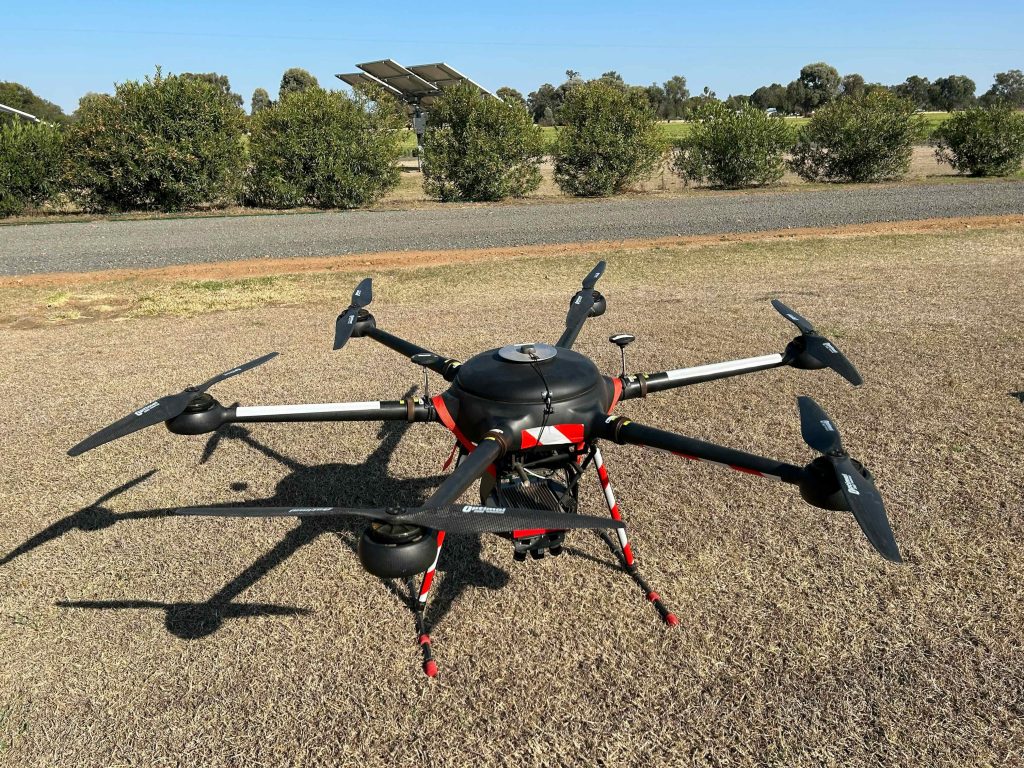
Agricultural spray drones have moved beyond the question of whether they can provide value in agriculture, but the technology is still evolving rapidly. Manufacturers, universities, researchers and operators continue to experiment with new applications, refine spray systems and flight parameters and test how drones can perform across different crops and production environments. From biologicals and beneficial insects to precision applications and other emerging uses, innovation is expanding the role drones may play on the farm. The question is increasingly not simply whether drones can work in agriculture, but where they can provide the greatest agronomic, operational and economic value.
Farmers can increasingly evaluate aircraft firsthand at distributor demonstrations, extension events, farm bureau programs and national gatherings such as the Spray Drone End User Conference, World Ag Expo and Commodity Classic. The larger question has become what the U.S. agricultural drone industry will look like as adoption grows.
American manufacturing capacity is not yet sufficient to replace the established imported market. At the same time, domestic companies are investing, international manufacturers are adapting, growers are gaining experience and policymakers are changing the environment in which all of them operate. The tension between innovation, affordability, security and agricultural practicality may ultimately define the next phase of the industry.
Agricultural spray drones are continuing to find their place on American farms. What comes next will depend on how manufacturers, regulators, distributors and growers adapt to a rapidly changing environment while continuing to experiment, innovate and advance the technology. The challenge will be balancing innovation, security, affordability and the practical realities of agriculture as the industry moves into its next phase.
What’s Next?
The U.S. agricultural spray drone industry is changing almost as quickly as the technology itself. Part 2 of this piece will examine the latest developments reshaping the sector, including evolving FAA and FCC regulations, new pressures on global drone supply chains, Blue UAS and NDAA considerations, advances from U.S. manufacturers and the arrival of new heavy-lift platforms in agriculture. It will also explore how these changes could affect manufacturers, distributors, operators and growers as the industry enters its next phase.