



The Advanced Air Mobility Institute continues to meet its goals of “educating and advocating for the broadest public benefit” of Advanced Air Mobility (AAM).
In November 2025, the Advanced Air Mobility Institute hosted a roundtable discussion on the infrastructure supporting the advanced air mobility industry. Sponsored by AAMToday and moderated by Bill Johnson, senior advisor to the AAMI’s Infrastructure Working Group, the primary goal of this event was to discuss the foundations necessary to truly bring AAM operations to life.
The roundtable was separated into two sessions: one was for introductions and background presentations and the other was for panel discussion. Participating in this roundtable were several leaders of the AAM industry and representatives from the manufactures of eVTOL aircraft.
Infrastructure Stakeholders
The roundtable opened with presentations from several of the participating companies who discussed their active engagement in the development of AAM infrastructure, the challenges that eVOTL product developers face, as well as possible solutions to these challenges. Topics ranged from vertiport construction and considerations to descriptions of automated tools that provide vertiport location decision aids to urban planners.
Skyportz
CEO of Skyportz, Clem Newton-Brown, noted that the AAM industry must not become the Segway of the aviation industry. Real cost reduction and economic viability across the industry is critical to future successful operations. He advocated for low capital projects while suggesting that the hub-and-spoke operational method could reduce costs.
Skyportz recently unveiled the AeroBermTM vertiport designed as a modular, small footprint, low-cost product. The AeroBermTM is designed to mitigate the three biggest concerns associated with eVTOL operations: downwash and outwash, battery fires and noise. OEMs and regulators were invited to take advantage of Skyportz’s test bed.
Vports
Founder and CEO of Vports, Dr. Fethi Chebil, stated that his company is looking to build a link between the US and Canada in the near future. This would expand to partnerships in Dubai with an operational testing site that would further grow to surrounding areas in southern UAE. Dr. Chabil sees scaled operations of air taxi eVTOLs not happening until after 2035 as the key elements necessary to push the business case for UAM will be understanding eVTOL air transportation as an extension of ground transportation.
LYNEports
Founder and CEO of LYNEports, Rasha Alsami, discussed how the ecosystem of AAM is outpacing government regulators, therefore, city planners want to understand where to locate vertiports to make them viable for the long run. LYNEport’s AI supported tool feeds upon any data base provided by the customers–whether it be regulations, ground transportation, network layouts, cargo specification or air traffic density information. Additionally, these products can be used for business development or urban planning. Early-stage infrastructure planning and decision making are the real bottleneck in moving UAM forward and LYNEport’s tool can be used by existing air operations to support new or expanded current operation infrastructure or business decision making.
Vertiports by Atlantic
While many of the speakers focused on the challenges of eVTOL and UAM operations, Kevin Cox of Vertiports by Atlantic was fundamentally bullish on the future. He stated that much of the discussion in the AAM industry over complicates the issues and that eVTOLs can easily integrate into current business cases. This belief was builton the fact that Atlantic Aviation already has a network of 150 FBOs that support robust operations. He contends that his company can leverage this through Atlantic’s partnership with Ferrovial to rapidly integrate eVTOL into the aviation business. He expects operations to begin in 2026 and scale rapidly through 2028.
Vertiport Chicago
Daniel Mojica, CEO of Vertiport Chicago, provided a very different point of view. Vertiport Chicago is a fully operational heliport providing 24/7 emergency support for lifesaving missions. While the reality of UAM is still some time away, Mojica is still looking forward to the integration of eVTOLs into the greater Chicago metropolitan airspace. He has been watching the development with a more conservative view by understanding what will be required of an existing heliport to grow into a fully functional vertiport. He agreed that there are challenges, but he sees the upcoming FAA pilot project programs as an opportunity for Chicago Vertiport to be a leader in this transformation.
Aircraft Manufacturers
The roundtable brought the perspective of the OEMs into the conversation. The likes of Eve Air Mobility, BETA Technologies and MightFly discussed the development status of their aircraft and what they see as key infrastructure considerations for effective operations of their systems.
Eve Air Mobility
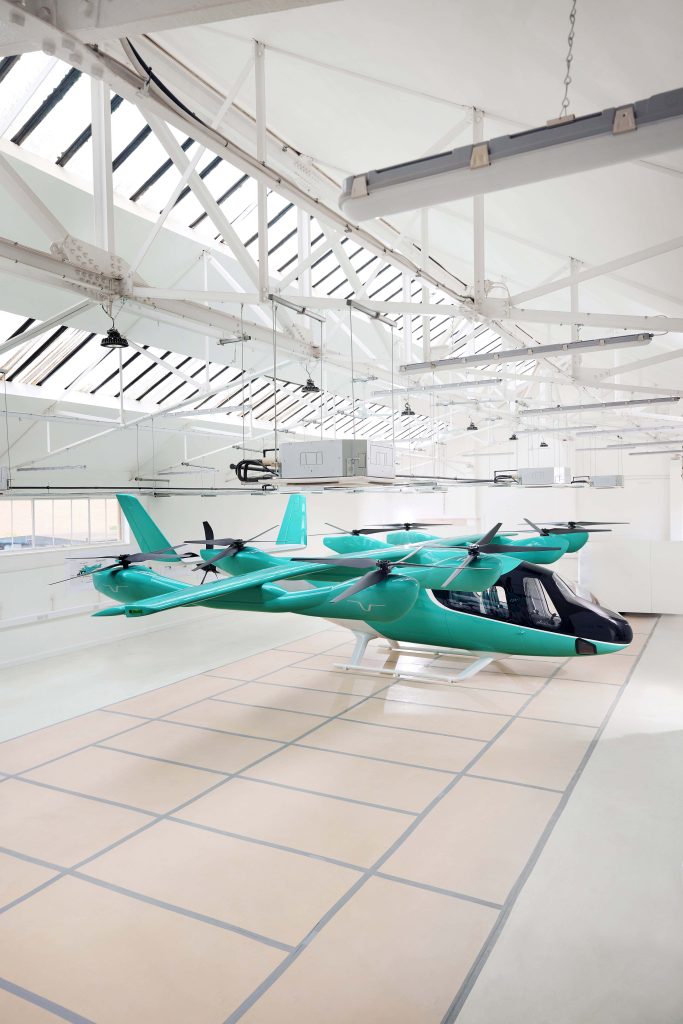
Eve Air Mobility has a long history of design, certification and manufacturing. With a strong connection between Eve Air Mobility and Embraer, Eve continues to abide by Embraer’s first core value: safety. For Eve Air Mobility, safety is the most critical aspect for this new industry to gain the confidence of the flying public. Eve Air Mobility has been a thought leader in infrastructure considerations, even publishing an infrastructure guide designed to help the industry move toward sustainable and safe operations. Eve is taking a slightly more conservative approach in the introduction of its aircraft with a smaller number and restricted markets.
BETA Technology
In November 2025, BETA began trading on the New York Stock Exchange with an IPO and maintains an employee base of over 900. The company has three pillars: all electric aircraft manufacturing, charger infrastructure manufacturing, and electric aircraft pilot and mechanics training.
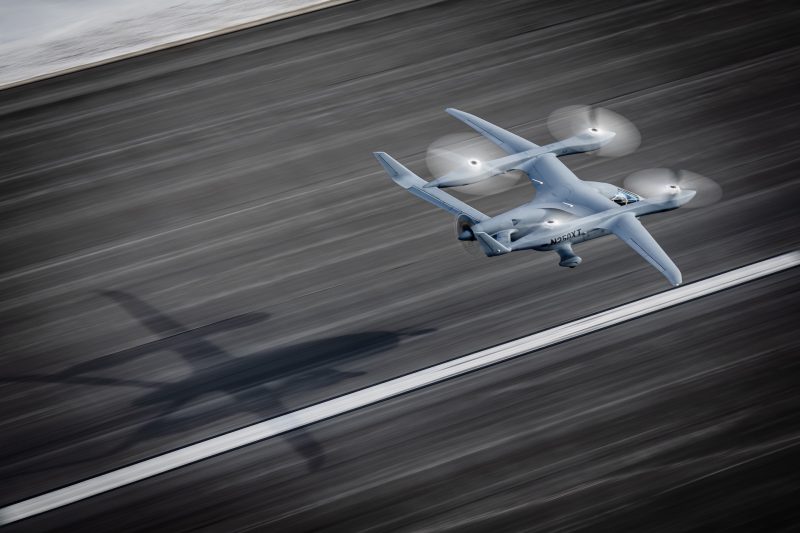
The main business cases in BETA’s strategy are medical logistics, air ambulance, cargo delivery, passenger operations, and government missions. These will be serviced by the all-electric Alia aircraft with two variants–a conventional landing and takeoff, and a vertical landing and takeoff. During the roundtable, BETA introduced a network of 54 charging sites that they’ve established across the US as well as various charging systems that they have developed.

MightyFly
MightyFly is developing autonomous, unmanned, B2B and defense-focused expedited logistics. Their hybrid-eVTOL is roughly the size of three cars and targets a cargo capacity in the range of 100-500lbs, with the ability to carry about 200 small packages. With a range of between 600-1000 miles, the system has a unique capability of picking up and dropping off at multiple sites. The aircraft has matured through three designs, flown in demonstrations for the US Air Force, and has completed over 400 autonomous test flights.
Recent business successes for MightyFly include contracts with the US Air Force’s Air Mobility Command and Agility Prime, and a contract with the Michigan Office of Future Mobility and Electrification (OFME) to investigate options for resolving non-efficient, just-in-time logistics with intracity flight demonstrations. Within the past month, MightyFly signed a $50M contract to provide accessible healthcare test kit delivery to significantly reduce the customers’ logistics costs. For the future, MightyFly is working on possible contracts for Hawaii inter-island delivery, just-in-time deliveries for hardware manufacturing dealers, expedited delivery for high value items, defense, and support for firefighting.
Conclusion
This three-hour session provided a broad and highly insightful window to the ongoing development of vertiports and AAM infrastructure challenges. This group of experts gave insight into a variety of topics including vertiport planning, electrical infrastructure concerns, integratio,n and coordination with local municipalities and much more.
It is clear, these types of industry discussions are critical to the successful development of the Advanced Air Mobility ecosystem. By voicing challenges and exploring solutions with those vested in the industry, and creating the products that will populate the AAM market, we might not only achieve but accelerate fulfilling the promise of this new chapter of aviation.